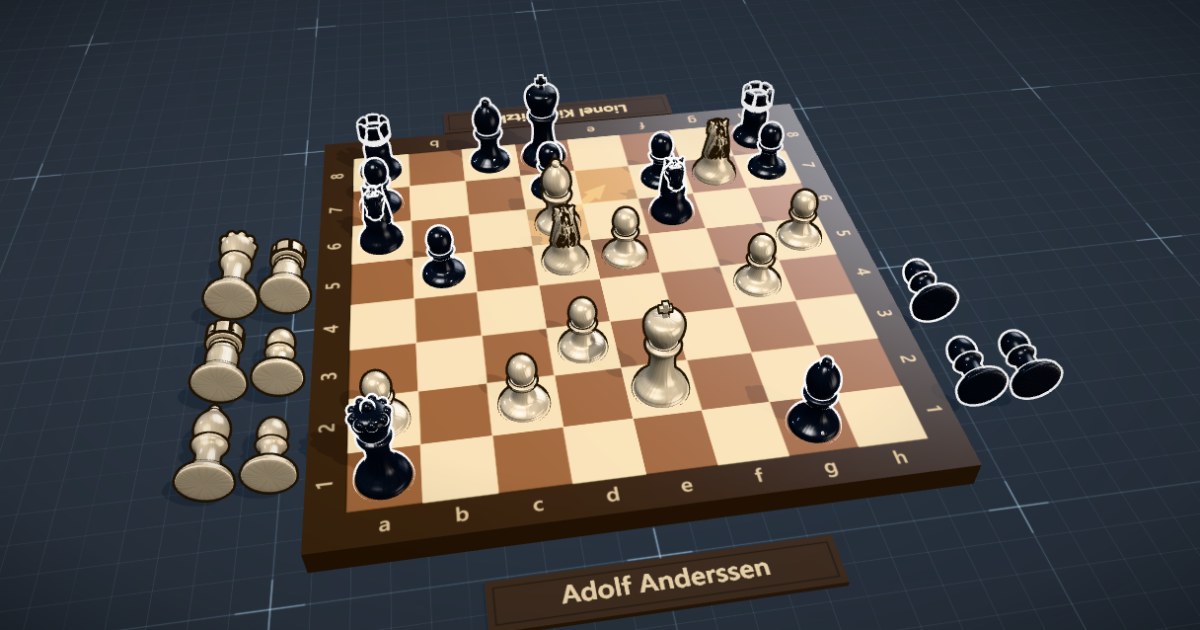
A casual game in London
In the summer of 1851 London held the first international chess tournament, alongside the Great Exhibition. Adolf Anderssen, a German mathematics teacher, won it. Between rounds he sat down for a friendly game with Lionel Kieseritzky, a professional from the Café de la Régence in Paris and one of the strongest attacking players of the day.
Nothing rode on the result, and that shows. Nobody was playing for safety. Kieseritzky liked the game enough to publish it himself in his Paris magazine, La Régence. In 1855 the Austrian master Ernst Falkbeer called it “the Immortal Game”, and the name stuck.
An opening where everyone attacks
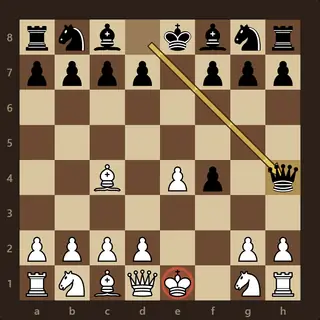
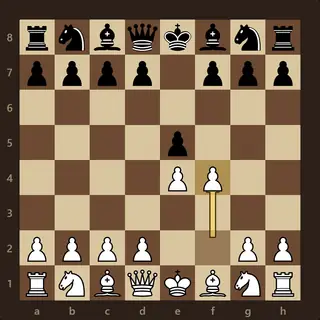
Anderssen opened with the King’s Gambit, giving up a pawn with 2.f4 to open the f-file. In 1851 this was not a surprise. It was how most games began. Kieseritzky took the pawn and, after 3.Bc4, brought his queen out with check: 3…Qh4+.
That check cost White the right to castle, as the king had to step to f1. But it also put Black’s queen in the middle of White’s position. For the next twenty moves Anderssen developed his pieces by attacking her. A knight went to h4 and then f5, and pawns pushed to g4, h4 and h5. Almost every move chased the queen while bringing another white piece into play.
The first gift: a bishop
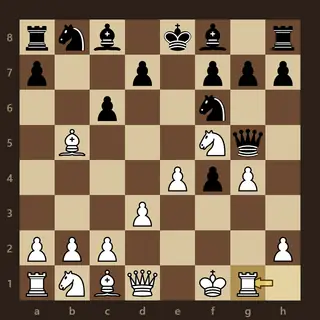
At 11.Rg1 Anderssen moved his rook to g1 and simply left his bishop on b5 to be taken. Kieseritzky took it with 11…cxb5. He was now a whole piece ahead, and by any normal count winning.
Look at the board at that point and you see why Anderssen didn’t mind. Black had developed almost nothing except the queen. A few moves later 14.Qf3 threatened to trap that queen, and the only defence was to send the black knight all the way back home to g8. Fourteen moves in, Black had a material lead and a position that barely existed.
The famous move: both rooks
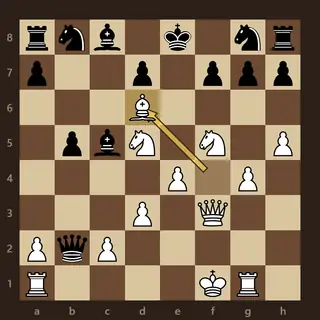
With 17.Nd5 the knight jumped to d5, threatening a fork on c7 and inviting Black to take the rook on g1. Black grabbed a pawn instead with 17…Qxb2, lining the queen up on the other rook in the corner.
Then came 18.Bd6. The bishop stepped into the middle of Black’s camp and left both rooks hanging. It may be the most famous move in chess. Kieseritzky took the first rook with 18…Bxg1. Anderssen answered with the quiet 19.e5, which cut the black queen off from the kingside, and then let her take the second rook with check: 19…Qxa1+.
Count the pieces at that moment. Black had won a bishop and two rooks. White had a queen, two knights, a bishop and some pawns, and every one of them was pointed at the black king.
The queen, too, and mate
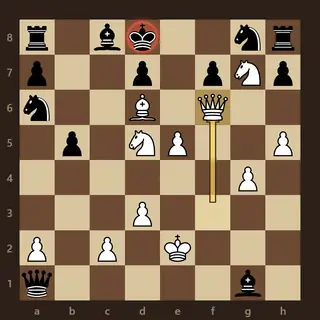
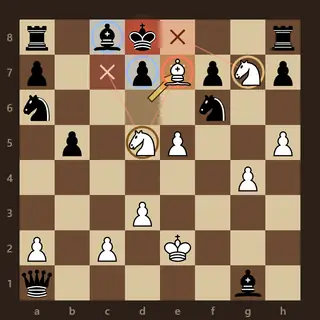
After 20.Ke2 and 20…Na6 the knight that had arrived on f5 twelve moves earlier finally struck: 21.Nxg7+. The king had one square. Then Anderssen gave away the last big piece he had: 22.Qf6+. Black had to take it with the knight, and that knight was the only thing guarding e7. 23.Be7# was checkmate.
White finished without a queen, without either rook, and without one bishop. The three pieces that delivered mate were two knights and a bishop, the pieces nobody had bothered to take.
Did it really end like that?
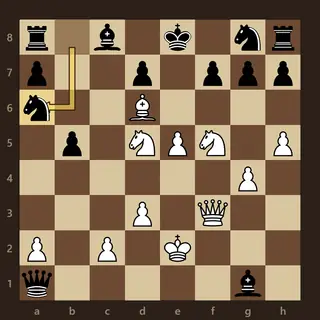
Probably not quite. Several sources say Kieseritzky resigned around move 20, before the final combination was played. The finish everyone reproduces is Anderssen’s own analysis of how it would have ended. That is why our page for the game marks the last five half-moves as the published finish rather than moves actually played.
Modern engines are also hard on both players. Black had better defences along the way, and 18.Bd6 is not what a computer would play. None of that has hurt the game’s reputation. It is famous for its idea, not for being accurate: material counts for nothing when your opponent’s pieces are all doing something and yours aren’t.
Play through it yourself
Every move named above is a link: click one to open the 3D board at that exact position. For the full game with a note on each key move, see The Immortal Game, move by move.